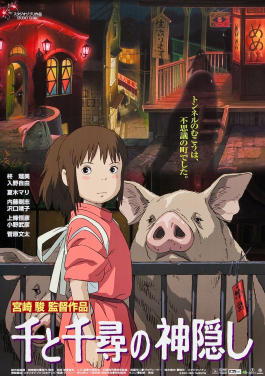
> SPIRITED AWAY
Hayao Miyazaki’s animated fantasy about a young girl navigating a spirit bathhouse and discovering courage, empathy, and independence.
Overview
Spirited Away is a 2001 Japanese animated fantasy written and directed by Hayao Miyazaki for Studio Ghibli. Ten-year-old Chihiro enters a spirit world where her parents are transformed into pigs. To survive and rescue them, she works in a bathhouse ruled by the witch Yubaba and gradually grows from a frightened child into a resourceful, compassionate person.
Key Facts
- Written and directed by Hayao Miyazaki
- Produced by Studio Ghibli
- Original Japanese title: Sen to Chihiro no Kamikakushi
- Won the Academy Award for Best Animated Feature
Production and History
Miyazaki developed the story with young girls in mind, seeking a heroine whose strength emerged through ordinary perseverance rather than combat. The film was largely hand-drawn, with digital tools used to support compositing and selected effects. Its environments draw on Japanese architecture, folklore, bathhouse culture, and the director’s imagination.
Story Structure and Style
Chihiro’s name is taken from her when Yubaba renames her Sen, making memory and identity central to the story. The bathhouse operates through rules, labor, appetite, and exchange. Episodes such as cleansing the polluted river spirit and traveling by train slow the plot to create mystery and reflection. Characters resist simple labels: threatening figures may reveal vulnerability, while apparent helpers have mixed motives.
Impact / Legacy
The film became one of Japan’s greatest box-office successes and introduced many international viewers to Studio Ghibli. Its richly observed animation and refusal to over-explain the spirit world influenced filmmakers and strengthened the global standing of animated cinema.
Did You Know?
- The silent train journey is one of the film’s most celebrated sequences.
- The character No-Face changes behavior in response to the environment around him.
- Food is used repeatedly to show greed, care, danger, and transformation.
- The film won the Golden Bear at the Berlin International Film Festival.