> THE GODFATHER
Francis Ford Coppola’s crime epic about the Corleone family, power, loyalty, and the transformation of Michael Corleone.
Overview
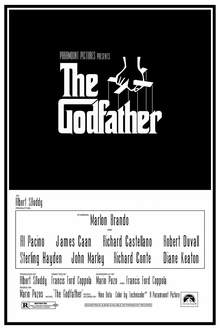
The Godfather is a 1972 American crime drama directed by Francis Ford Coppola and adapted from Mario Puzo’s novel. Marlon Brando plays Vito Corleone, head of a powerful New York crime family, while Al Pacino plays his initially reluctant son Michael. The film combines the scale of a family saga with an intimate study of power, loyalty, violence, and moral decline.
Key Facts
- Directed by Francis Ford Coppola
- Screenplay by Coppola and Mario Puzo
- Stars Marlon Brando, Al Pacino, James Caan, and Robert Duvall
- Won the Academy Award for Best Picture
Production and History
Paramount Pictures acquired Puzo’s novel before it became a bestseller. Coppola faced studio resistance over casting, period detail, and the film’s deliberate pace. Brando’s career was then considered uncertain, and Pacino was not the studio’s preferred choice for Michael. Location photography, restrained lighting by Gordon Willis, and Nino Rota’s music helped establish the film’s distinctive atmosphere.
Story Structure and Style
The story is organized around Michael’s transformation from decorated war veteran and family outsider to calculating leader. Ceremonies frame the violence: the opening wedding introduces family obligations, while the baptism sequence crosscuts sacred vows with coordinated killings. Dim interiors, composed group scenes, and withheld violence create tension without treating the characters’ world as simple spectacle.
Impact / Legacy
The Godfather reshaped the gangster film by treating organized crime as a family institution with traditions, business pressures, and political connections. It influenced generations of filmmakers and led to two sequels. Its dialogue, performances, and visual style remain among the most referenced in cinema.
Did You Know?
- Brando used a dental mouthpiece during his screen test to alter Vito’s appearance.
- The cat in the opening scene was not originally specified in the script.
- Gordon Willis became known as the “Prince of Darkness” for his low-key cinematography.
- The film’s success helped secure Coppola greater control over The Godfather Part II.