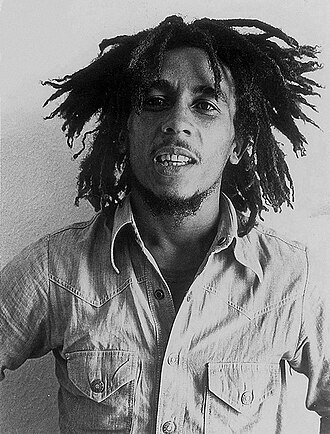
> BOB MARLEY
Jamaican singer-songwriter who brought reggae and Rastafari-inspired messages of resistance, unity, and hope to a global audience.
Overview
Bob Marley was a Jamaican singer, songwriter, and guitarist who became reggae’s best-known international ambassador. With the Wailers and later Bob Marley and the Wailers, he joined memorable melodies and danceable rhythms to lyrics about love, oppression, spirituality, African identity, and social unity. Songs such as “One Love,” “Redemption Song,” and “No Woman, No Cry” remain recognized around the world.
Key Facts
- Born Robert Nesta Marley in Nine Mile, Jamaica
- Formed the Wailers with musicians including Peter Tosh and Bunny Wailer
- Major albums include Catch a Fire, Natty Dread, Exodus, and Uprising
- Closely associated with the Rastafari movement
History and Career
Marley grew up in rural Jamaica and Kingston’s Trench Town neighborhood. The early Wailers recorded ska and rocksteady before developing the slower, bass-centered reggae sound heard internationally in the 1970s. A partnership with Island Records brought wider distribution and polished album production. After Tosh and Bunny Wailer pursued solo careers, Marley continued with a new Wailers lineup and the I-Threes vocal group.
Musical Style and Structure
Marley’s music rests on reggae’s offbeat guitar and keyboard accents, prominent bass lines, steady drums, and call-and-response vocals. His songwriting often uses clear verses and memorable choruses to carry complex political or spiritual ideas. The warmth of the grooves can contrast with lyrics about poverty, exile, violence, and liberation.
Impact / Legacy
Marley helped turn a Jamaican musical form into a global language of resistance and solidarity. He also introduced many listeners to Rastafari and Pan-African ideas. His image and songs have sometimes been simplified into symbols of relaxation, but the recordings preserve a sharper message about justice and human dignity.
Did You Know?
- Marley survived an assassination attempt in Kingston in 1976.
- He performed at Zimbabwe’s independence celebration in 1980.
- The 1978 One Love Peace Concert brought rival Jamaican political leaders onto the stage.
- He received Jamaica’s Order of Merit after his death.