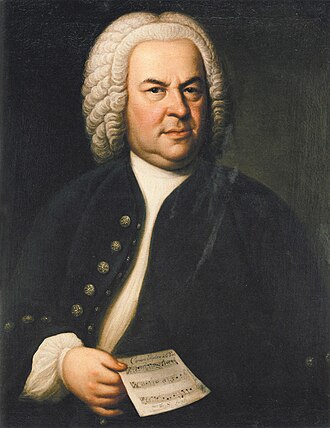
> JOHANN SEBASTIAN BACH
German Baroque composer renowned for counterpoint, sacred music, keyboard works, and lasting technical influence.
Overview
Johann Sebastian Bach was a German composer and musician of the Baroque era. He combined existing European styles with exceptional command of harmony and counterpoint, the art of weaving independent melodic lines together. His output includes church cantatas, concertos, keyboard collections, organ works, and large sacred compositions.
Key Facts
- Born into a large family of professional musicians
- Worked in Weimar, Köthen, and Leipzig
- Composed the Brandenburg Concertos and The Well-Tempered Clavier
- Served as Thomaskantor, directing church music in Leipzig
History and Career
Bach held a series of posts as organist, court musician, and music director. At Köthen, where his duties were largely secular, he produced major instrumental works. In 1723 he moved to Leipzig, where he taught at St. Thomas School and supplied music for the city’s principal churches. This demanding position led to cycles of cantatas and works such as the St. Matthew Passion.
Musical Style and Structure
Bach’s music is defined by disciplined architecture and expressive detail. In a fugue, a principal theme enters in one voice and is answered and transformed by others. He also used dance forms, chorale melodies, and repeating bass patterns. The Well-Tempered Clavier explores all major and minor keys through paired preludes and fugues.
Impact / Legacy
Bach’s reputation as a composer grew dramatically in the nineteenth century, particularly after Felix Mendelssohn promoted the St. Matthew Passion. His work became foundational for the study of harmony and counterpoint and influenced composers from Mozart and Beethoven to jazz musicians and modern arrangers.
Did You Know?
- Bach walked a long distance as a young man to hear organist Dieterich Buxtehude.
- He fathered 20 children, several of whom became notable composers.
- The six Brandenburg Concertos were dedicated to the Margrave of Brandenburg.
- “Bach” means “brook” in German.