> QUEEN
British rock band known for Freddie Mercury’s theatrical voice, Brian May’s guitar sound, layered harmonies, and stadium anthems.
Overview
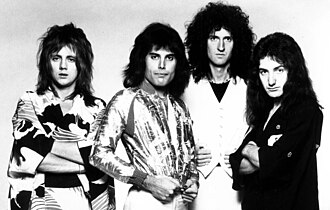
Queen is a British rock band formed by Freddie Mercury, Brian May, Roger Taylor, and John Deacon. The group combined hard rock with pop, opera, music hall, funk, and electronic textures. Its elaborate recordings and theatrical concerts produced songs that range from the multi-part “Bohemian Rhapsody” to the participatory stadium chants of “We Will Rock You.”
Key Facts
- Classic lineup: Freddie Mercury, Brian May, Roger Taylor, and John Deacon
- Each member wrote major hit songs
- Released A Night at the Opera in 1975
- Delivered a celebrated performance at Live Aid in 1985
History and Career
May and Taylor first played together in Smile before Mercury joined and proposed the name Queen. Deacon completed the lineup in 1971. The band’s early albums developed a layered, ambitious sound, and “Bohemian Rhapsody” brought international success. Queen continued to fill arenas through the 1980s. Mercury died from AIDS-related illness in 1991; later performances have featured May and Taylor with guest vocalists.
Musical Style and Structure
Queen built dense vocal harmonies by overdubbing Mercury, May, and Taylor. May’s handmade Red Special guitar and orchestrated guitar layers created another recognizable signature. Songs frequently change style within a single track: “Bohemian Rhapsody” moves through ballad, operatic, hard-rock, and reflective sections without a conventional chorus.
Impact / Legacy
Queen’s recordings remain staples of radio, sport, theater, and public celebration. The band demonstrated that technically ambitious rock could also be direct and communal. Mercury’s commanding stage presence and openness as a performer made him an enduring cultural icon.
Did You Know?
- Brian May built the Red Special guitar with his father.
- “Another One Bites the Dust” was written by John Deacon.
- “Radio Ga Ga” was written by Roger Taylor.
- The audience’s synchronized clapping at Live Aid became one of the performance’s defining images.