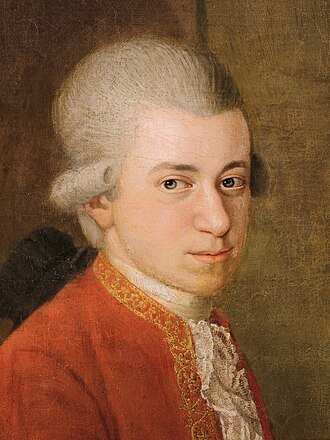
> WOLFGANG AMADEUS MOZART
Austrian composer and child prodigy whose operas, symphonies, and concertos became landmarks of the Classical era.
Overview
Wolfgang Amadeus Mozart was an Austrian composer whose extraordinary fluency appeared in nearly every major musical form of his age. Although he died at only 35, he created more than 600 works, including operas, symphonies, concertos, chamber music, sacred music, and solo pieces. His music combines clarity and elegance with drama, humor, and deep emotion.
Key Facts
- Born in Salzburg and later worked independently in Vienna
- Toured European courts as a child performer with his sister Maria Anna
- Composed The Marriage of Figaro, Don Giovanni, and The Magic Flute
- Left his famous Requiem unfinished at his death
History and Career
Mozart’s father, Leopold, recognized his talent early and organized extensive tours that introduced the young musician to European styles and patrons. Mozart later served the archbishop of Salzburg but disliked the limits of court employment. In 1781 he settled in Vienna as a freelance composer, teacher, and performer. His final decade produced many of his most admired piano concertos, operas, and chamber works.
Musical Style and Structure
Mozart mastered the balanced phrases and formal designs of the Classical style. Within those structures, he gave melodies a natural, vocal quality and used harmony and orchestration to reveal character. His operas are especially celebrated for ensembles in which several characters sing different emotions simultaneously while the music remains coherent.
Impact / Legacy
Mozart’s work became a standard of compositional craft for later musicians, including Beethoven. His operas remain regularly performed because their characters feel psychologically alive, while his instrumental music continues to shape musical education and concert programming.
Did You Know?
- Mozart began composing in early childhood.
- His full baptismal name was considerably longer than the name used today.
- He wrote The Magic Flute for a popular Viennese theater rather than a royal court.
- The circumstances of his death inspired myths, but there is no evidence that Antonio Salieri poisoned him.