> MARCUS AURELIUS
Roman emperor and Stoic philosopher known for Meditations and his commitment to duty and reason.
Overview
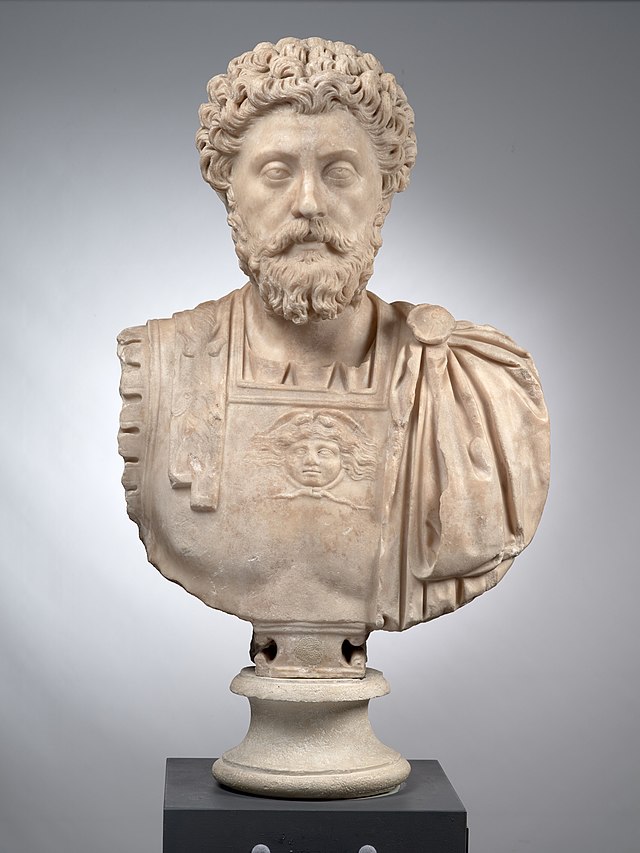
Marcus Aurelius is remembered as both a powerful Roman emperor and a thoughtful philosopher. His writings, known as Meditations, provide insight into Stoic philosophy and personal discipline. He ruled during a challenging period but remained committed to reason and ethical leadership.
Early Life
Marcus Aurelius was born into a wealthy Roman family in 121 AD. From a young age, he received a strong education in philosophy, especially Stoicism, which emphasized self-control, rational thinking, and acceptance of fate. These ideas deeply influenced his leadership style.
Reign
He ruled as emperor from 161 to 180 AD, a time marked by wars along Rome’s borders and internal difficulties. Despite these pressures, Marcus Aurelius remained focused on his responsibilities and the well-being of the empire. His leadership balanced military necessity with philosophical reflection.
Philosophy
His work Meditations was written as a personal journal, never intended for publication. It explores themes such as resilience, duty, and the nature of human existence. Today, it is considered one of the most important philosophical texts.
Legacy
Marcus Aurelius is often described as the ideal philosopher-king. His influence extends beyond history into modern philosophy and leadership thinking.
Did You Know?
- Meditations was written during military campaigns.
- He was the last of the “Five Good Emperors.”
- His philosophy still influences leadership studies.
- He emphasized duty over personal gain.