> NEVILLE CHAMBERLAIN
British prime minister known for appeasement toward Nazi Germany before WWII, a policy still debated by historians.
Overview
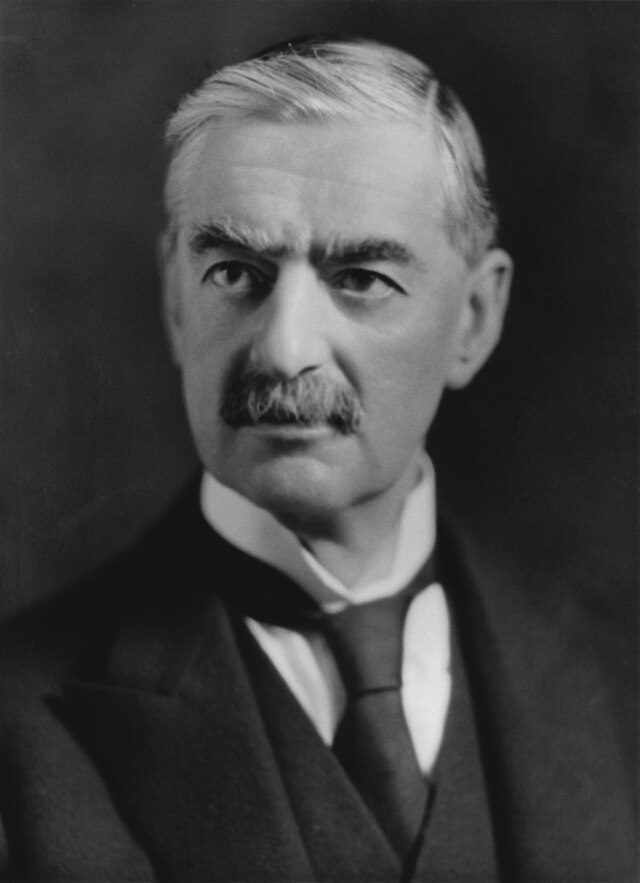
Neville Chamberlain served as Prime Minister of the United Kingdom from 1937 to 1940 during a critical period leading up to World War II. He is most closely associated with the policy of appeasement toward Adolf Hitler’s Germany, which aimed to avoid another devastating global conflict. His leadership decisions remain some of the most debated in modern history.
Early Life
Chamberlain was born in Birmingham, England, into a prominent political family. His father, Joseph Chamberlain, was a major political figure, which influenced Neville’s eventual path into public service. Unlike many politicians, he entered politics relatively late after building a successful career in business. He gained early recognition for his work in local government, particularly in improving housing conditions and urban planning.
Leadership and Appeasement
As prime minister, Chamberlain believed that diplomacy could prevent another world war. His most notable action was the Munich Agreement of 1938, in which Britain and France allowed Germany to annex the Sudetenland region of Czechoslovakia. Chamberlain returned to Britain declaring he had secured “peace for our time.” However, Germany’s continued expansion soon proved that appeasement had failed to stop Hitler’s ambitions.
War and Resignation
In September 1939, Germany invaded Poland, prompting Britain to declare war. Chamberlain’s leadership came under increasing criticism as the war began poorly for the Allies. In 1940, he resigned and was replaced by Winston Churchill, who adopted a more aggressive stance against Nazi Germany.
Legacy
Chamberlain’s legacy remains complex. While often criticized for appeasement, some historians argue that his policies bought time for Britain to strengthen its military. His leadership highlights the challenges of making decisions under uncertainty and rising global threats.
Did You Know?
- Chamberlain declared war on Germany in 1939.
- He was the first British prime minister to travel by airplane for diplomacy.
- The Munich Agreement is still studied in international relations.
- He died shortly after leaving office.