> THE SCREAM
Expressionist masterpiece by Edvard Munch symbolizing anxiety and human emotion, recognized for its haunting figure and vivid colors.
Overview
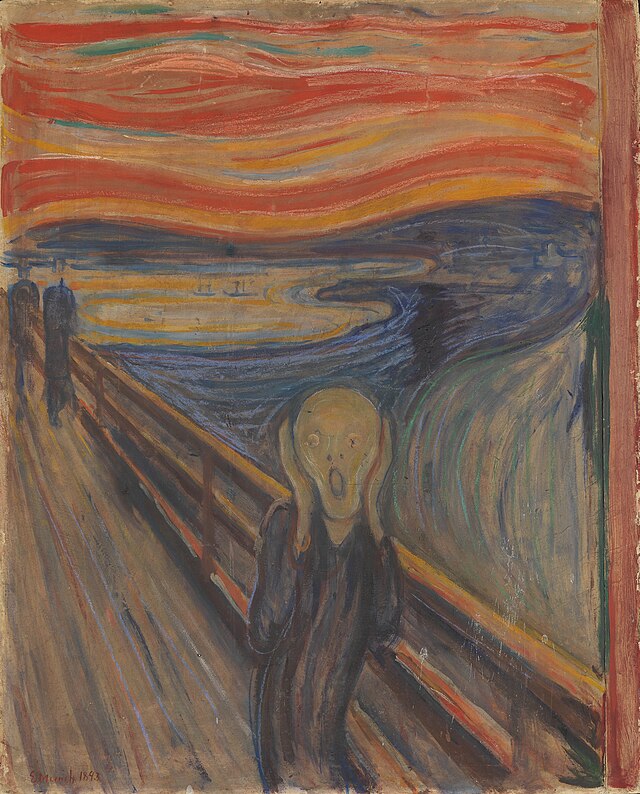
The Scream is one of the most iconic artworks in modern history, created by Norwegian artist Edvard Munch. Known for its haunting figure and swirling background, the painting captures a moment of intense emotional distress. It has become a universal symbol of anxiety and existential fear.
Key Facts
- Artist: Edvard Munch
- Year: 1893
- Medium: Oil, tempera, and pastel (varies by version)
- Origin: Norway
- Style: Expressionism
Creation
Munch was inspired by a personal experience during a walk at sunset, where he felt overwhelmed by a sense of anxiety. He described the sky as “blood red” and imagined hearing a scream passing through nature.
Style and Technique
The painting uses bold colors and distorted forms to convey emotion rather than realism. The swirling lines and exaggerated figure emphasize psychological intensity, making it a defining work of Expressionism.
Impact / Legacy
The Scream has become a cultural icon, often used to represent fear, anxiety, and emotional turmoil. It has influenced modern art and continues to resonate in contemporary culture.
Did You Know?
- There are multiple versions of The Scream created by Munch.
- One version sold for nearly $120 million in 2012.
- The figure’s gender is intentionally ambiguous.
- It has been stolen more than once from museums.