> GETTYSBURG ADDRESS
Abraham Lincoln’s Gettysburg Address reframed the Civil War as a test of equality, democracy, and national purpose.
Overview
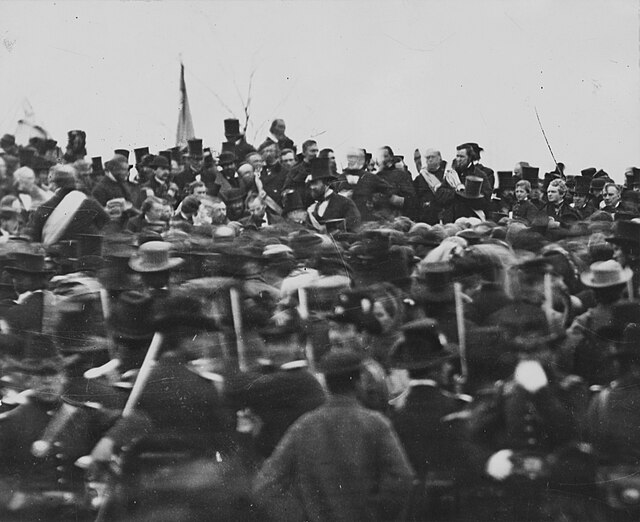
The Gettysburg Address is one of the most famous speeches in American history. Delivered by President Abraham Lincoln on November 19, 1863, at the dedication of the Soldiers’ National Cemetery in Gettysburg, Pennsylvania, it came months after the Battle of Gettysburg, a turning point in the American Civil War. In just a few minutes and fewer than 300 words, Lincoln honored the dead while giving the war a larger meaning. He presented the conflict as a test of whether a nation founded on liberty and equality could endure.
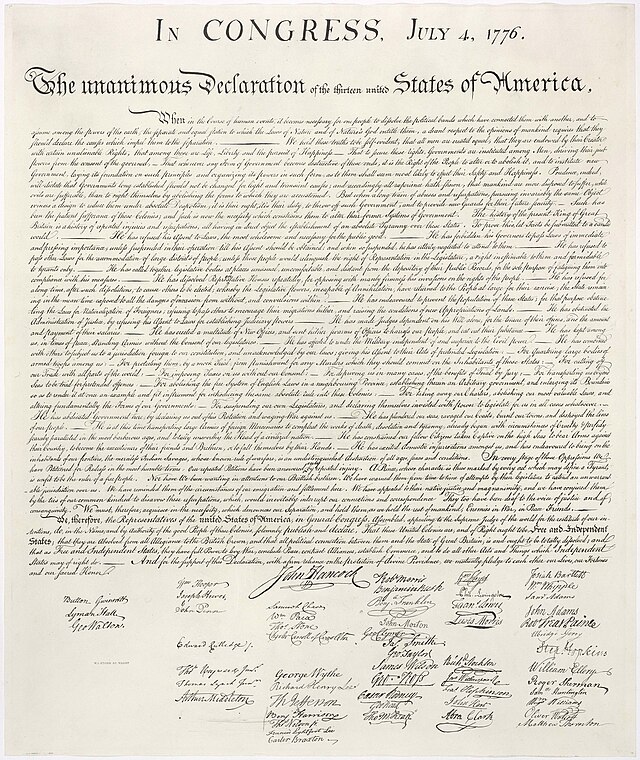
Though brief, the address became a defining statement of American ideals. Its language connected the Civil War to the Declaration of Independence, especially the principle that “all men are created equal.” As a historical document, the Gettysburg Address remains central to discussions of democracy, citizenship, national unity, and political rhetoric.
Background
The Battle of Gettysburg was fought from July 1 to July 3, 1863, and resulted in massive casualties on both the Union and Confederate sides. In response, Pennsylvania leaders created a national cemetery for Union soldiers who had died there. The dedication ceremony included a formal oration by Edward Everett, one of the era’s most respected speakers. Lincoln was invited to offer “a few appropriate remarks.”
At the time, the Civil War had already transformed from a struggle to preserve the Union into a broader fight over slavery and freedom. Lincoln’s Emancipation Proclamation had taken effect earlier in 1863. Against this backdrop, the ceremony at Gettysburg offered Lincoln a chance to explain why the war’s sacrifices mattered.
Content and Meaning
The speech begins with the words “Four score and seven years ago,” referring to 1776, the year of the Declaration of Independence. By starting there rather than with the Constitution, Lincoln emphasized the nation’s founding ideals of liberty and equality. He described the United States as “conceived in Liberty, and dedicated to the proposition that all men are created equal.”
Lincoln then shifted to the battlefield itself, saying the living could not truly consecrate the ground because the soldiers had already done so through their actions. This idea redirected attention from ceremony to sacrifice. In the final lines, he called on the living to continue the soldiers’ unfinished work so that “government of the people, by the people, for the people, shall not perish from the earth.”
This closing phrase helped define the speech’s enduring power. It cast the Civil War not only as a national crisis but also as a global test of self-government.
Impact and Legacy
Initial reactions to the Gettysburg Address were mixed, but its reputation grew steadily over time. It is now widely viewed as a masterpiece of concise political writing and a key text in American history. The address shaped public memory of the Civil War by framing it as a struggle for a “new birth of freedom,” not merely a military contest between North and South.
The speech also influenced later civil rights and democratic movements. Its emphasis on equality and national purpose has been quoted by presidents, activists, and scholars for generations. Today, the Gettysburg Address is studied in schools, carved into monuments, and remembered as a model of clear, moral leadership in a time of crisis.
Did You Know?
- The Gettysburg Address was only about 272 words long, yet it became one of the most cited speeches in the world.
- Abraham Lincoln was not the main speaker at the ceremony; Edward Everett delivered the formal address, which lasted about two hours.
- There are several manuscript copies of the Gettysburg Address, and they differ slightly in wording and punctuation.
- The phrase “under God” appears in the best-known version of the speech, though historians have debated exactly how Lincoln phrased it during delivery.