> CODE OF HAMMURABI
One of the world’s earliest surviving law codes, the Code of Hammurabi shaped justice and royal authority in ancient Babylon.
Overview
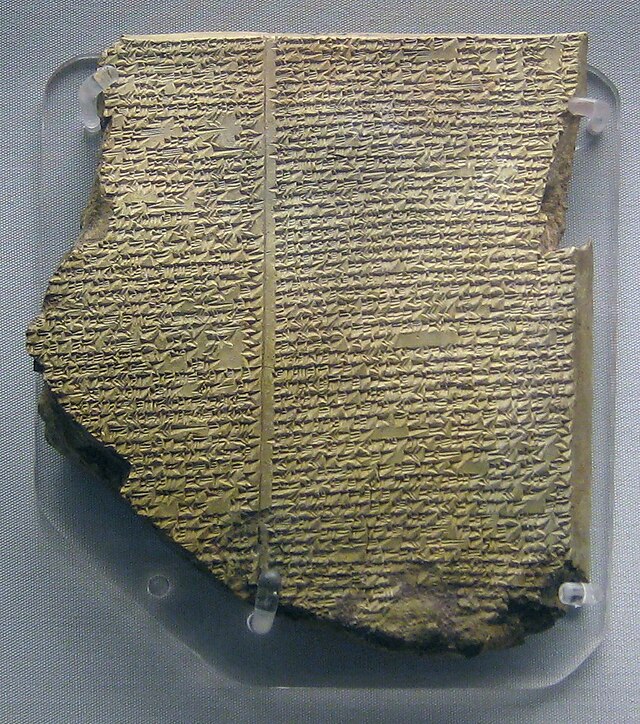
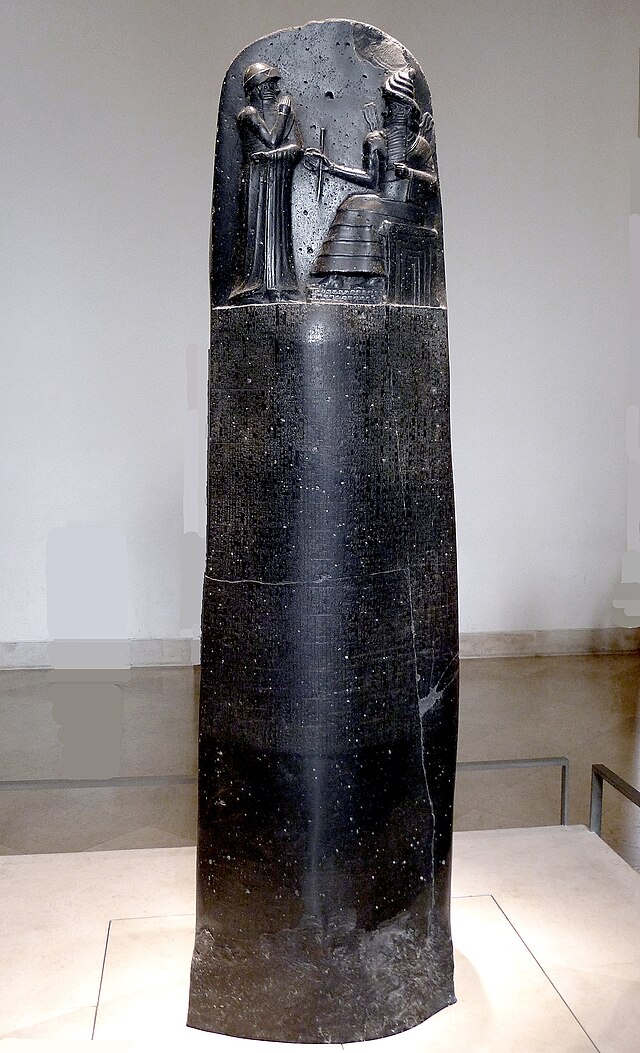
The Code of Hammurabi is one of the most famous legal documents from the ancient world. Created in Babylon during the reign of King Hammurabi around c. 1754 BCE, it gathered nearly 300 laws covering crime, trade, family life, labor, and property. The code is best known today from a large basalt stele inscribed in Akkadian cuneiform, though copies on clay tablets also circulated.
This Babylonian law code is important not because it was the first set of laws ever written, but because it survives in unusually complete form and offers a detailed view of how justice worked in Mesopotamia. It also reveals how kings used law to present themselves as guardians of order.
Background
Hammurabi ruled the Old Babylonian Empire and expanded Babylon into a major regional power. As his kingdom grew, the need for more consistent legal standards likely increased. The code emerged within a broader Mesopotamian tradition of lawmaking, following earlier legal collections from rulers such as Ur-Nammu and Lipit-Ishtar.
At the top of the stele, Hammurabi is shown receiving authority from Shamash, the god associated with justice. This image was politically powerful. It linked the king’s laws to divine approval and reinforced the idea that royal rule was part of a cosmic order, not merely a human arrangement.
Content and Legal Principles
The Code of Hammurabi contains 282 laws, though some parts of the text are damaged. The laws are written in a conditional format: if a person commits a certain act, then a specific penalty follows. Topics include theft, assault, contracts, debts, wages, marriage, inheritance, slavery, and agricultural management.
A central feature of the code is its emphasis on structured penalties. Some punishments follow the principle often summarized as “an eye for an eye”, meaning that the penalty should reflect the harm done. However, penalties were not equal for all people. Social class and status mattered greatly. Different consequences could apply depending on whether the victim was a free person, a dependent commoner, or an enslaved person.
The code also shows concern for evidence, witnesses, and judges. Some laws punished false accusations or judicial misconduct. This suggests that Babylonian justice involved formal procedures, not only arbitrary royal command.
Impact and Legacy
The Code of Hammurabi has had lasting historical importance because it helps scholars understand ancient law, society, and government. It demonstrates that complex urban states in the ancient Near East relied on written legal standards long before the classical civilizations of Greece and Rome.
Modern readers sometimes assume the code functioned like a complete legal system in daily use, but historians debate this point. It may have served partly as a royal statement of ideal justice rather than a practical handbook for every courtroom. Even so, it reflects real social concerns and legal thinking in ancient Babylon.
The stele was later taken from Babylon to Susa in present-day Iran, where it was rediscovered in 1901 by French archaeologists. Today, it is housed in the Louvre Museum in Paris, where it remains one of the most recognized artifacts of ancient history.
Did You Know?
- The Code of Hammurabi was written in Akkadian using cuneiform, one of the world’s earliest writing systems.
- Although famous for harsh punishments, the code also regulated wages, prices, and business contracts.
- The black stone stele is over 2 meters tall, making it both a legal text and a public monument.
- Hammurabi’s laws were not the earliest known law code; older Mesopotamian examples existed before his reign.
- The phrase “eye for an eye” is strongly associated with the code, but many laws imposed fines or other penalties instead.