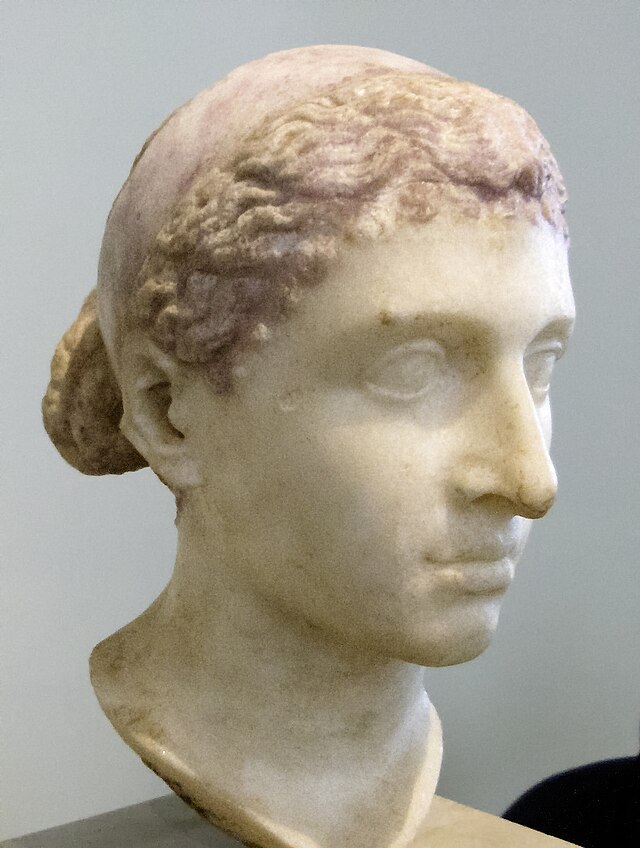
> CLEOPATRA
Last active pharaoh of Ptolemaic Egypt, a shrewd diplomat whose alliances with Julius Caesar and Mark Antony shaped the end of the Roman Republic.
Overview
Cleopatra VII Thea Philopator was the last active ruler of the Ptolemaic Kingdom of Egypt and one of the most skillful political operators of the ancient world. Famous for her romantic entanglements with the Roman leaders Julius Caesar and Mark Antony, she was also a capable administrator, linguist, and naval commander who kept Egypt independent for two decades while Rome swallowed almost every other Mediterranean power. Her suicide in 30 BCE ended the three-hundred-year Ptolemaic dynasty and the age of pharaohs.
Rise to Power
Cleopatra was born in Alexandria in 69 BCE into the Greek-speaking Macedonian dynasty founded by Ptolemy, a general of Alexander the Great. She was, by surviving accounts, the first Ptolemaic ruler in three centuries to learn Egyptian, and she also spoke Greek, Latin, Hebrew, and several other tongues. She became co-ruler with her ten-year-old brother Ptolemy XIII in 51 BCE, but a palace power struggle soon forced her into exile. In 48 BCE, when Julius Caesar arrived in Alexandria pursuing his rival Pompey, Cleopatra famously had herself smuggled past her brother's guards — according to Plutarch, rolled up in a carpet or bedding — to plead her case. Caesar backed her, defeated Ptolemy XIII's forces, and restored her to the throne.
Rome and Mark Antony
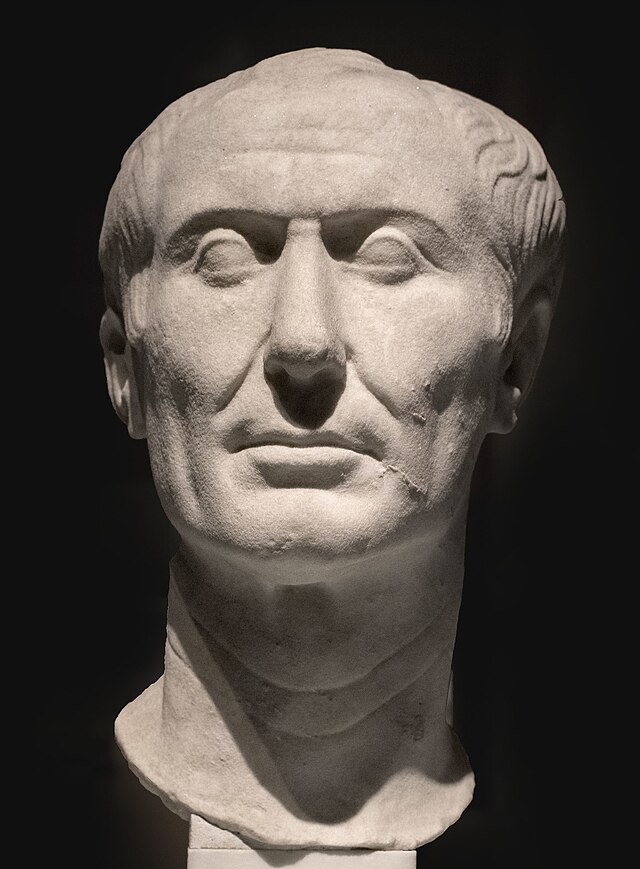
Cleopatra bore Caesar a son, Caesarion, and spent time in Rome as his guest until his assassination in 44 BCE. In the civil war that followed, she aligned with Mark Antony, one of the most powerful Roman generals. Their partnership was both political and personal; they had three children together and jointly ruled a vast eastern empire for more than a decade. But Antony's rival Octavian — Caesar's adopted heir — portrayed Cleopatra as a foreign seductress corrupting a Roman statesman, a propaganda campaign that helped him rally the western provinces against them. At the Battle of Actium in 31 BCE, Octavian's fleet crushed Antony and Cleopatra's navy off the coast of Greece.
Death and Legacy
When Octavian's forces reached Alexandria the following year, Antony killed himself after false reports of Cleopatra's death. Cleopatra, facing capture and humiliating display in a Roman triumph, chose to die by her own hand — tradition holds that she allowed herself to be bitten by an asp, though the actual method is uncertain. Egypt was annexed as a Roman province, and Octavian returned to Rome to become the emperor Augustus. Cleopatra has since been endlessly reinvented — in Shakespeare, in opera, in countless films — usually reduced to a romantic figure. Modern historians increasingly emphasize her intelligence, diplomatic cunning, and stewardship of a kingdom that survived far longer than it should have against the might of Rome.
Did You Know?
- Cleopatra was of Macedonian Greek descent, not Egyptian.
- She reportedly spoke at least seven languages, including Egyptian.
- Her son Caesarion was executed by Augustus on the orders that "too many Caesars is not a good thing."
- She was born closer in time to the Moon landing than to the building of the Great Pyramid of Giza.