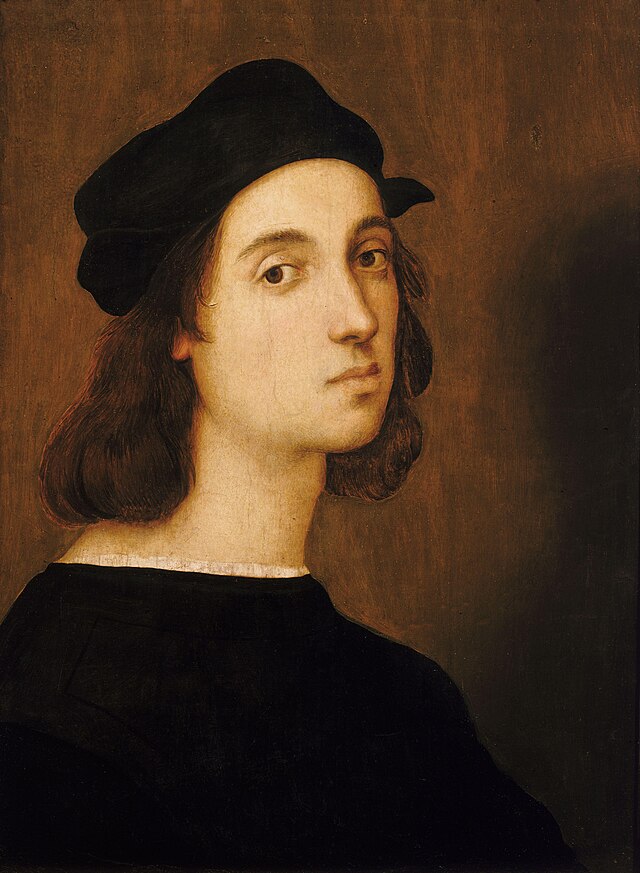
> RAPHAEL
Italian High Renaissance painter and architect whose harmonious compositions defined the classical ideal of Western art.
Overview
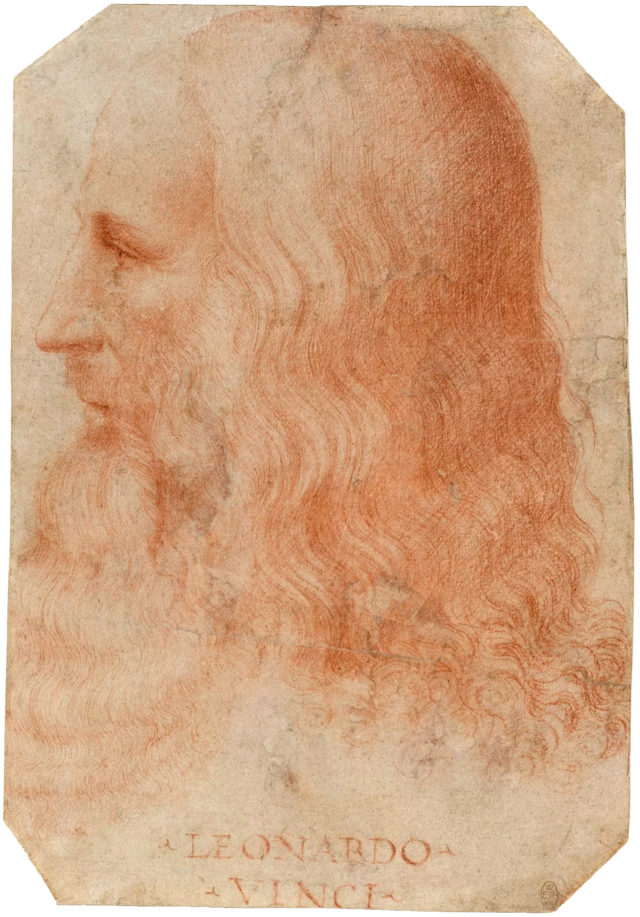
Raphael — born Raffaello Sanzio da Urbino — was one of the three great masters of the Italian High Renaissance, alongside Leonardo da Vinci and Michelangelo. Admired in his own lifetime and enormously influential for centuries afterward, Raphael became the model of classical harmony in Western painting. His compositions balanced clarity, grace, and emotional warmth in a way that later artists, from the French Academy through the Pre-Raphaelites, either emulated or rebelled against.
Early Life and Training
Raphael was born in 1483 in Urbino, a small but intellectually vibrant court in central Italy. His father, Giovanni Santi, was a painter and courtier at the Montefeltro court, and Raphael grew up surrounded by the ducal library, frescoes, and refined humanist culture. He lost his mother at age eight and his father at eleven, taking over his father's workshop as a teenager. In his late teens he apprenticed with Pietro Perugino in Perugia, absorbing Perugino's soft, balanced style before moving to Florence around 1504. There he studied the works of Leonardo and Michelangelo intensively, filling sketchbooks with their anatomical dynamism and their approach to composition.
Rome and the Papal Commissions
In 1508 Pope Julius II summoned Raphael to Rome and entrusted him with decorating a suite of papal apartments in the Vatican, now known as the Stanze di Raffaello. The most famous of these rooms, the Stanza della Segnatura, contains his School of Athens, a synthesis of ancient philosophy that arranges Plato, Aristotle, Euclid, Pythagoras, and dozens of other thinkers within a grand classical architecture. Raphael worked for Julius II and his successor Leo X, producing altarpieces such as the Sistine Madonna, designing tapestries for the Sistine Chapel, and eventually being appointed chief architect of St. Peter's Basilica. By his thirties he ran a large workshop that supplied half of papal Rome with portraits, frescoes, and designs.
Legacy
Raphael died unexpectedly in 1520 at just thirty-seven, on his birthday according to his biographer Vasari. The loss was mourned as a civic tragedy in Rome; his funeral drew huge crowds, and he was buried in the Pantheon, where his tomb can still be visited. For centuries afterward, his compositional sense was the standard by which European painters were trained. The term "Raphaelesque" became shorthand for ideal classical beauty, and even artists who rejected his model — the Pre-Raphaelite Brotherhood in nineteenth-century Britain, for example — defined themselves against him. His work remains foundational to how Western art understands harmony, proportion, and the human figure in space.
Did You Know?
- Raphael died at just thirty-seven, reportedly on his birthday.
- He is buried in the Pantheon in Rome, one of only a handful of artists granted that honor.
- His School of Athens fresco contains portraits of contemporary figures dressed as ancient philosophers.
- He briefly served as chief architect of St. Peter's Basilica before his death.