> FALL OF THE BERLIN WALL
Historic event marking the collapse of the Berlin Wall and the end of Cold War division in Germany.
Overview
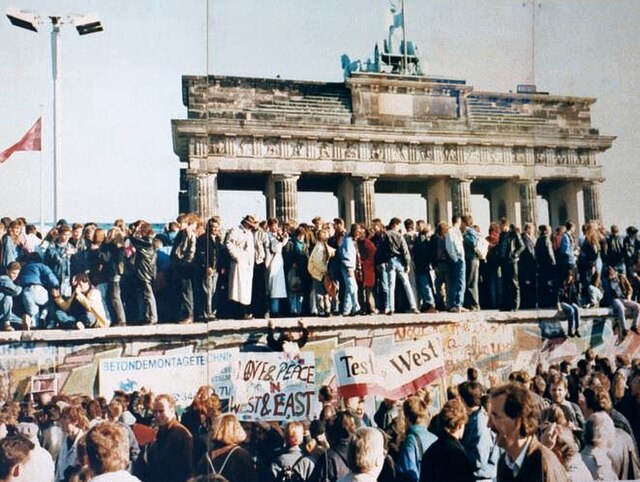
The fall of the Berlin Wall on November 9, 1989, marked a turning point in world history. It symbolized the collapse of communist control in Eastern Europe and the beginning of the end of the Cold War. The event led directly to the reunification of Germany.
Background
The Berlin Wall was built in 1961 to separate East and West Berlin. It prevented citizens of East Germany from fleeing to the West. Over time, it became a powerful symbol of political division between communism and democracy.
The Event
In 1989, political changes and public protests across Eastern Europe weakened communist governments. In East Germany, growing pressure forced officials to relax travel restrictions. A miscommunication during a press conference led thousands of citizens to gather at the wall, where guards eventually allowed them to pass.
Impact
The fall of the wall led to German reunification in 1990. It also accelerated the collapse of communist regimes across Eastern Europe and reshaped global politics.
Legacy
Today, the fall of the Berlin Wall is remembered as a symbol of freedom and unity. It marked the end of one of the most tense periods in modern history.
Did You Know?
- The wall fell without a single official order.
- People celebrated by breaking pieces of the wall.
- Germany reunified less than a year later.
- Parts of the wall remain as memorials.