> TEMPLE OF LUXOR
Ancient Egyptian temple complex on the Nile, associated with Amun and royal ceremony in the city of Thebes.
Overview
The Temple of Luxor is one of ancient Egypt’s most impressive religious monuments. Located on the east bank of the Nile in modern Luxor, ancient Thebes, it was built and expanded by several pharaohs and became an important center of ceremony and kingship. Its grand columns, statues, and reliefs continue to make it one of Egypt’s most celebrated temple complexes.
Historical Background
Much of the temple was built during the reign of Amenhotep III in the 14th century BC, though later rulers, especially Ramses II, added important features. Unlike some Egyptian temples focused primarily on a god’s local cult image, Luxor had a strong connection to royal ideology and ceremony. It played a major role in the Opet Festival, during which sacred statues traveled between Karnak and Luxor in a ritual that reinforced divine kingship.
Architecture and Features
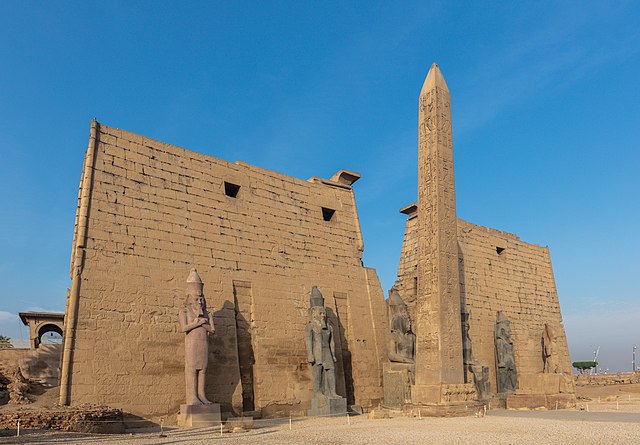
The temple is famous for its monumental entrance, colossal statues, obelisks, and long colonnades. Ramses II placed massive seated figures of himself at the front, emphasizing royal authority. Inside, visitors move through courts, halls, and sanctuaries arranged along an axial plan. The scale of the columns and the carved reliefs create a powerful sense of order and sacred grandeur. The temple’s setting along the Nile and its connection to the nearby Avenue of Sphinxes further enhance its ceremonial significance.
Legacy
The Temple of Luxor offers a vivid glimpse into ancient Egyptian religion, architecture, and political symbolism. Over the centuries, the site remained meaningful, and later structures, including a mosque, became part of its layered history. Today it is one of the most important archaeological attractions in Egypt and a key source for understanding the religious and public life of Thebes.
Did You Know?
- The temple was connected to Karnak by a ceremonial avenue lined with sphinxes.
- Ramses II added colossal statues and other major features to the site.
- One of Luxor’s original obelisks now stands in Paris.
- The temple played a major role in the ancient Opet Festival.