> STEP PYRAMID OF DJOSER
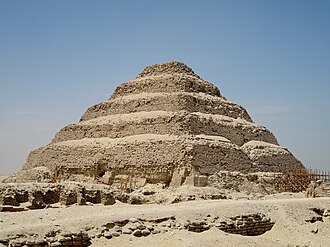
Ancient Egyptian pyramid at Saqqara, considered the earliest large-scale stone monument and a milestone in pyramid design.
Overview
The Step Pyramid of Djoser is one of the most important monuments in ancient Egyptian history. Located at Saqqara, it is widely considered the earliest large-scale stone building in the world. Built for the pharaoh Djoser, it marks a crucial turning point in the development of monumental architecture and the evolution of the pyramid form.
Historical Background
The pyramid dates to Egypt’s Third Dynasty, around the 27th century BC. It was designed as part of a larger funerary complex for King Djoser, whose reign belonged to the early Old Kingdom. Earlier royal tombs had usually taken the form of mastabas, flat-roofed rectangular structures. The Step Pyramid transformed that tradition by stacking mastaba-like layers vertically, creating a dramatic new shape that pointed toward the sky.
Architecture and Imhotep
The monument is traditionally associated with Imhotep, Djoser’s architect, who later became celebrated as a legendary scholar and healer. The six-tier structure was built from limestone and surrounded by courtyards, shrines, and ceremonial spaces. The pyramid complex expressed royal authority, religious belief, and a new ambition in Egyptian stone construction. It also set the stage for later smooth-sided pyramids, including those at Giza.
Legacy
The Step Pyramid of Djoser remains a landmark in architectural history because it shows the moment when Egyptian builders moved from earlier tomb designs to monumental pyramid construction. Its influence can be seen in later royal burial practices and in the symbolic language of ancient Egyptian kingship. Today it remains one of Saqqara’s most celebrated archaeological treasures.
Did You Know?
- The Step Pyramid is often considered the oldest monumental stone building in history.
- It was built for Pharaoh Djoser at Saqqara, not Giza.
- The architect Imhotep later became a legendary figure in Egyptian tradition.
- Its layered design helped inspire later pyramid development.