> ROSALIND FRANKLIN
Chemist whose X-ray diffraction work was critical to discovering the structure of DNA.
Overview
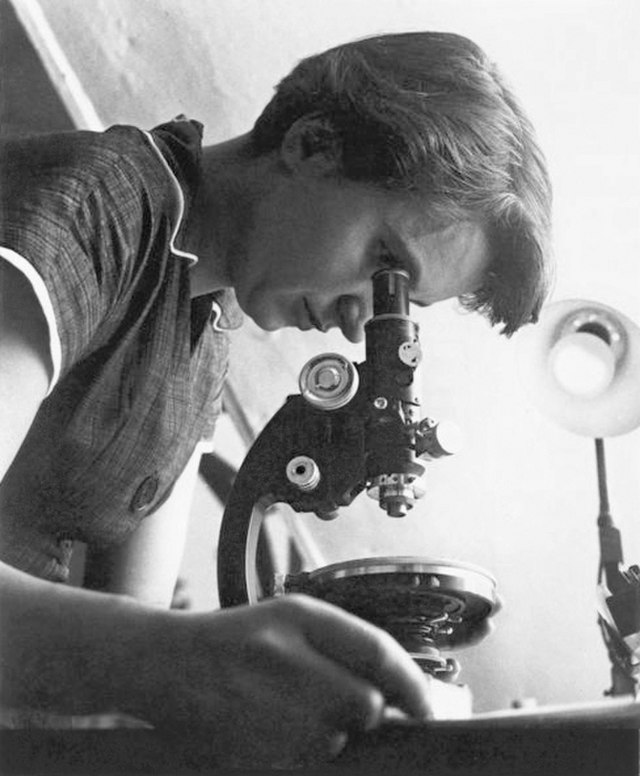
Rosalind Franklin was a British chemist and X-ray crystallographer whose research played a key role in discovering the structure of DNA. Although her contributions were not fully recognized during her lifetime, she is now acknowledged as one of the most important figures in modern science.
Early Life
Franklin was born in London in 1920 and showed strong academic ability from a young age. She studied chemistry at Cambridge University, where she developed an interest in physical chemistry and research.
DNA Research
Franklin’s work at King’s College London involved using X-ray diffraction to study DNA. Her famous “Photo 51” provided crucial evidence of DNA’s double-helix structure. This image was later used by James Watson and Francis Crick in their model.
Later Work
After leaving King’s College, Franklin conducted important research on viruses, including the structure of the tobacco mosaic virus. Her work contributed significantly to virology.
Legacy
Although she did not receive a Nobel Prize, Franklin’s contributions are now widely recognized. She is celebrated as a pioneer in molecular biology and as a symbol of women’s contributions to science.
Did You Know?
- Photo 51 was key to understanding DNA.
- She also studied viruses later in her career.
- She died at just 37 years old.
- Her work gained recognition after her death.