> AUGUSTUS
First Roman emperor who transformed the Republic into the Empire and initiated the Pax Romana.
Overview
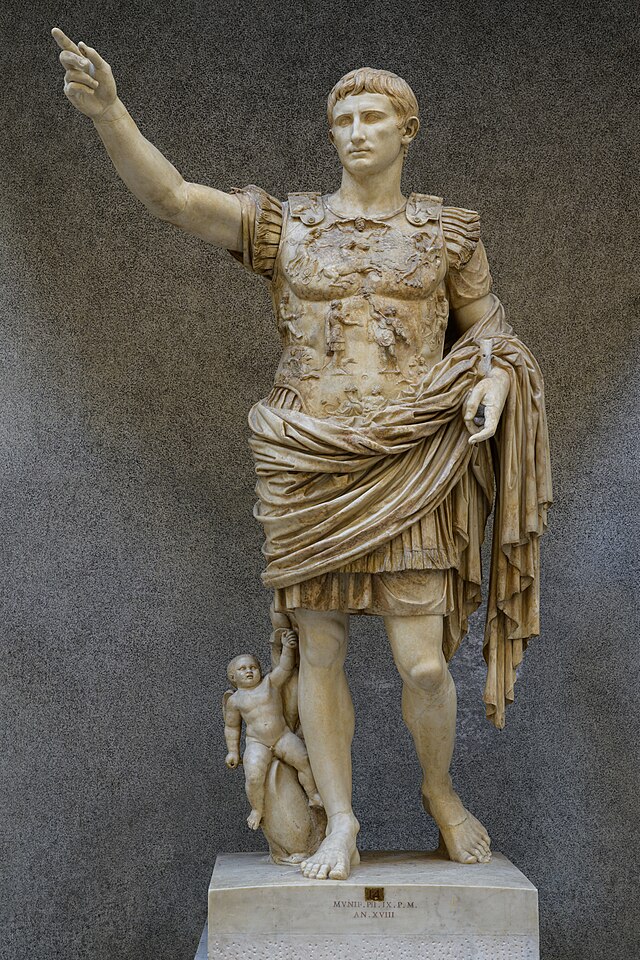
Augustus, originally known as Octavian, was the first emperor of Rome and one of the most influential political leaders in world history. His reign marked the transition from the Roman Republic to the Roman Empire, establishing a new system of governance that would last for centuries. Under his rule, Rome experienced stability and expansion during a period known as the Pax Romana.
Early Life
Born in 63 BC, Augustus was the adopted heir of Julius Caesar. After Caesar’s assassination in 44 BC, he quickly entered the political arena. Despite his youth, he formed strategic alliances, including the Second Triumvirate with Mark Antony and Lepidus. These alliances allowed him to consolidate power while eliminating rivals.
Rise to Power
Augustus eventually defeated Mark Antony and Cleopatra at the Battle of Actium in 31 BC, becoming the sole ruler of Rome. Rather than declaring himself a dictator, he carefully maintained the appearance of republican traditions while holding ultimate authority. This approach helped secure political stability and public support.
Reforms and Achievements
Augustus restructured the Roman military into a professional standing army and implemented major financial reforms. He invested heavily in infrastructure, building roads, aqueducts, and public monuments. He also supported arts and literature, ushering in a cultural golden age.
Legacy
Augustus established the foundations of imperial Rome. His leadership ensured long-term stability and influenced governance systems for centuries. His reign is considered one of the most successful in history.
Did You Know?
- Augustus ruled for over 40 years.
- His reign began the Pax Romana.
- He was Julius Caesar’s adopted son.
- He claimed to have “restored the Republic.”