> FALL OF THE ROMAN EMPIRE
The fall of the Western Roman Empire in 476 CE marked a major turning point in European and Mediterranean history.
Overview
The fall of the Roman Empire usually refers to the collapse of the Western Roman Empire in 476 CE, when the Germanic leader Odoacer deposed the young emperor Romulus Augustulus. This event did not mean that Roman civilization vanished overnight. Instead, it marked the end of imperial rule in the West after centuries of political instability, economic strain, military pressure, and internal division. The Eastern Roman Empire, later called the Byzantine Empire, continued for nearly a thousand more years.
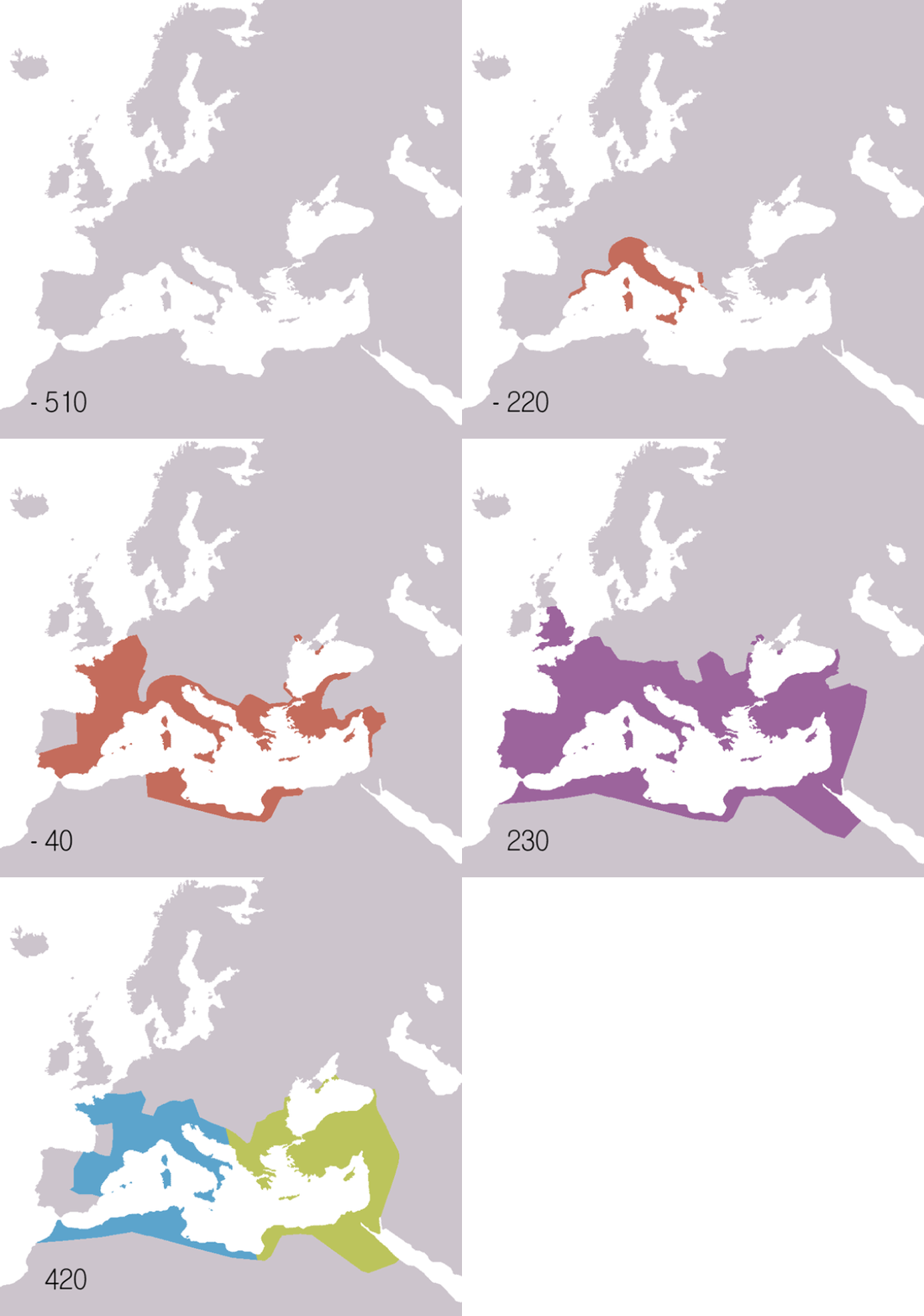
Historians see 476 CE as a symbolic date rather than a single moment of sudden destruction. By then, Roman authority in the western provinces had already weakened significantly. Britain had been largely abandoned, parts of Gaul and Spain were controlled by Germanic kingdoms, and North Africa had been lost to the Vandals. The emperor in Italy no longer commanded the full power once associated with Rome.
Background
Several long-term problems contributed to the fall of the Western Roman Empire. Political instability was a major factor. Emperors were frequently overthrown, assassinated, or replaced by military strongmen, making stable government difficult. Civil wars drained resources and weakened loyalty to the central state.
Economic troubles also played a key role. Heavy taxation, inflation, declining trade, and dependence on slave labor undermined the empire’s financial strength. Maintaining the army and defending vast borders became increasingly expensive. At the same time, local elites often focused more on regional interests than imperial unity.
Military challenges intensified from the third century onward. Rome faced invasions and migrations by groups such as the Goths, Vandals, Franks, and Huns. The empire increasingly relied on foreign-born soldiers and commanders, some of whom became powerful political actors in their own right.
Key Moments
A series of crises in the fourth and fifth centuries accelerated the empire’s decline. In 378 CE, the Romans suffered a major defeat at the Battle of Adrianople against the Visigoths. This exposed serious weaknesses in the imperial army. In 410 CE, the Visigoth king Alaric sacked Rome, shocking the Roman world even though the city was no longer the political capital.
Another major blow came in 455 CE, when the Vandals looted Rome. Meanwhile, western emperors grew weaker and more dependent on military generals. In 476 CE, Odoacer removed Romulus Augustulus from power and sent the imperial insignia to the Eastern emperor in Constantinople. Rather than naming a new Western emperor, Odoacer ruled Italy as king, signaling the end of the Western imperial office.
Impact and Legacy
The fall of the Western Roman Empire reshaped Europe, North Africa, and the Mediterranean. In its place, new kingdoms emerged, including those of the Ostrogoths, Visigoths, and Franks. Roman law, language, roads, and administrative ideas survived, but political unity in the West disappeared.
This transition helped usher in the early Middle Ages. Cities in some regions declined, long-distance trade contracted, and local power became more important. Yet the Roman legacy remained strong. The Christian Church preserved many Roman traditions, and later rulers, from Charlemagne to the Holy Roman Emperors, claimed to inherit Rome’s authority.
For historians, the fall of Rome remains one of the most debated events in world history. Rather than a simple collapse, it is now often understood as a long transformation from ancient empire to medieval Europe.
Did You Know?
- Romulus Augustulus, the last Western emperor, had a name linking him to both Rome’s legendary founder Romulus and its first emperor Augustus.
- The Eastern Roman Empire survived the fall of the West and continued until Constantinople fell in 1453.
- Rome was not the main political capital in its final western years; emperors often ruled from cities such as Milan and Ravenna.
- Many historians prefer the phrase “transformation of the Roman world” because Roman institutions and culture did not disappear all at once.