> KOREAN DMZ
Demilitarized zone dividing North and South Korea, one of the most fortified borders in the world.
Overview
The Korean Demilitarized Zone (DMZ) is a buffer zone separating North Korea and South Korea. Established after the Korean War armistice in 1953, it remains one of the most heavily fortified and politically sensitive borders in the world.
Background
The Korean War (1950–1953) ended with an armistice rather than a peace treaty, leaving the Korean Peninsula divided. The DMZ was created as a neutral zone to prevent further conflict between the two sides.
Structure
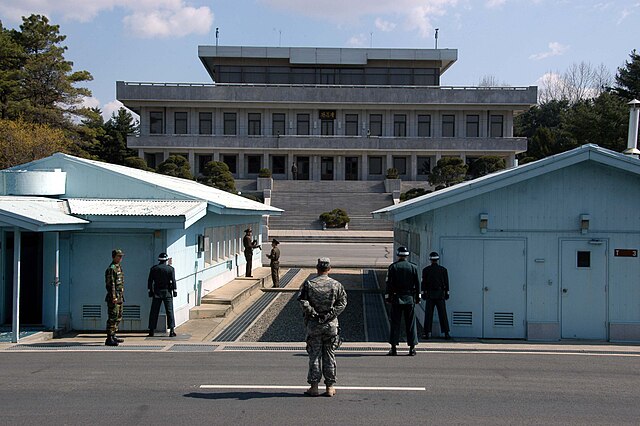
The DMZ stretches approximately 250 kilometers across the peninsula and is about 4 kilometers wide. Despite its name, it is heavily guarded, with military forces on both sides. The area includes fences, guard posts, and surveillance systems.
Human and Environmental Impact
While the DMZ is a symbol of conflict, it has also become an unexpected wildlife refuge due to limited human activity. Rare species now inhabit the area, creating a unique ecological zone.
Legacy
The DMZ represents the ongoing division of Korea and the unresolved tensions of the Cold War. It continues to be a focal point for diplomatic efforts and international attention.
Did You Know?
- The DMZ is one of the most militarized borders in the world.
- No peace treaty officially ended the Korean War.
- It has become a haven for wildlife.
- Occasional diplomatic meetings occur there.