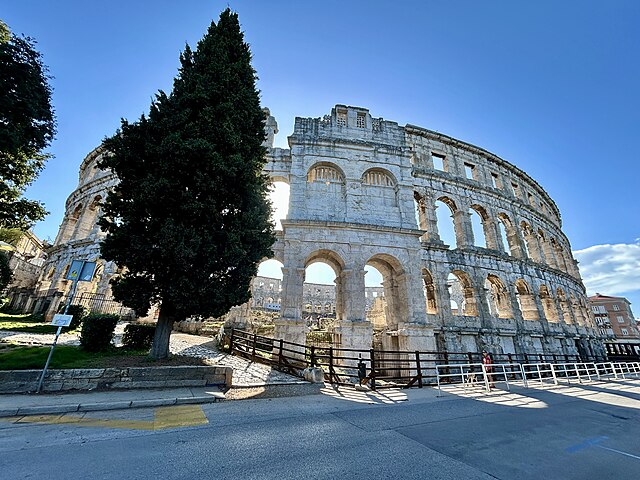
> PULA ARENA
Well-preserved Roman amphitheater in Croatia, known for gladiatorial history and continued use as a public venue.
Overview
The Pula Arena is one of the best-preserved Roman amphitheaters in the world and one of Croatia’s most famous historic landmarks. Located in the coastal city of Pula, it reflects the architectural skill and entertainment culture of the Roman Empire. Although ancient in origin, it continues to function today as a venue for concerts, festivals, and public events.
History
The arena was constructed between the late 1st century BC and the 1st century AD, during the period when Roman influence was firmly established in the region. Like other Roman amphitheaters, it was built to host gladiatorial games, animal hunts, and public spectacles. Such events served both as entertainment and as demonstrations of imperial authority. Pula’s importance as a Roman city helped justify the creation of such a large and monumental structure.
Architecture
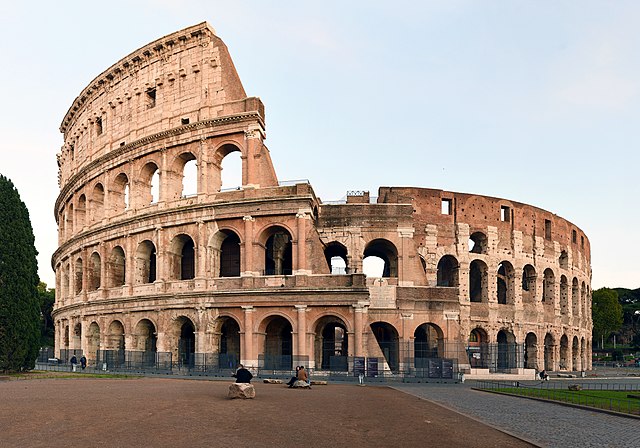
Built primarily from local limestone, the Pula Arena is elliptical in form and once held thousands of spectators. Its outer walls, arches, and tower-like structures remain especially impressive. Unlike many ancient amphitheaters that survive only in fragments, much of Pula Arena’s exterior still stands, giving visitors a strong sense of its original scale. Underground spaces beneath the arena floor were used for storing animals, equipment, and stage machinery related to performances.
Legacy
Today, the Pula Arena is both an archaeological treasure and a living cultural space. It offers insight into Roman urban life while also serving contemporary audiences. Its survival has made it an important symbol of continuity between the ancient and modern worlds. For historians, architects, and travelers, the arena stands as a powerful example of Roman engineering and the long afterlife of classical monuments.
Did You Know?
- The Pula Arena is among the best-preserved Roman amphitheaters in existence.
- Gladiatorial contests were once held inside its walls.
- It is still used today for films, concerts, and festivals.
- Much of its impressive outer limestone structure remains intact.