> NIKOLA TESLA
Inventor and electrical engineer whose work on alternating current systems transformed modern power distribution.
Overview
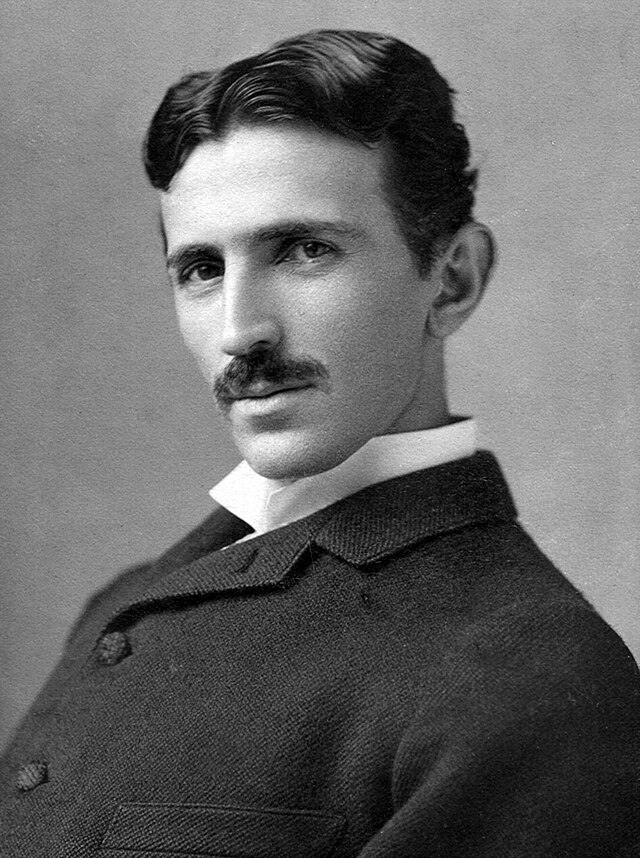
Nikola Tesla was one of the most visionary inventors of the modern age. Best known for his work on alternating current, or AC, electrical systems, he helped lay the foundation for the way electricity is generated and distributed today. Although many of his ideas seemed futuristic in his own lifetime, Tesla’s influence on engineering and technology remains enormous.
Early Life
Tesla was born in 1856 in Smiljan, in the Austrian Empire, an area now in modern-day Croatia. From an early age, he showed unusual memory, imagination, and technical curiosity. He studied engineering and worked in Europe before emigrating to the United States in 1884. There he briefly worked with Thomas Edison, though the two men had major disagreements, especially over direct current versus alternating current systems.
Inventions and Achievements
Tesla became famous for advancing AC technology, which proved far more practical than direct current for transmitting electricity over long distances. His work with transformers, motors, and polyphase systems played a crucial role in electrification. He also experimented with wireless transmission, radio-related technologies, remote control, and high-voltage devices such as the Tesla coil. Not every project succeeded, but his imagination consistently pushed beyond the limits of existing science and engineering.
Legacy
During his later years, Tesla struggled financially and did not always receive full recognition for his work. However, his reputation grew dramatically after his death. Today he is celebrated as a symbol of scientific creativity, bold invention, and technological foresight. His name survives in the tesla, a unit of magnetic flux density, and in popular culture as shorthand for visionary genius.
Did You Know?
- Tesla immigrated to the United States in 1884.
- He was a major champion of alternating current electrical systems.
- He demonstrated early forms of wireless remote control.
- The scientific unit “tesla” is named in his honor.