> CHERNOBYL DISASTER
The Chernobyl Disaster was a 1986 nuclear accident in Soviet Ukraine that caused deaths, mass evacuation, and long-term environmental harm.
Overview
The Chernobyl Disaster was a catastrophic nuclear accident that occurred on April 26, 1986, at Reactor No. 4 of the Chernobyl Nuclear Power Plant near Pripyat, in what was then the Ukrainian Soviet Socialist Republic. It remains the worst nuclear power plant accident in history. The explosion and fire released large amounts of radioactive material into the atmosphere, contaminating parts of Ukraine, Belarus, Russia, and wider Europe.
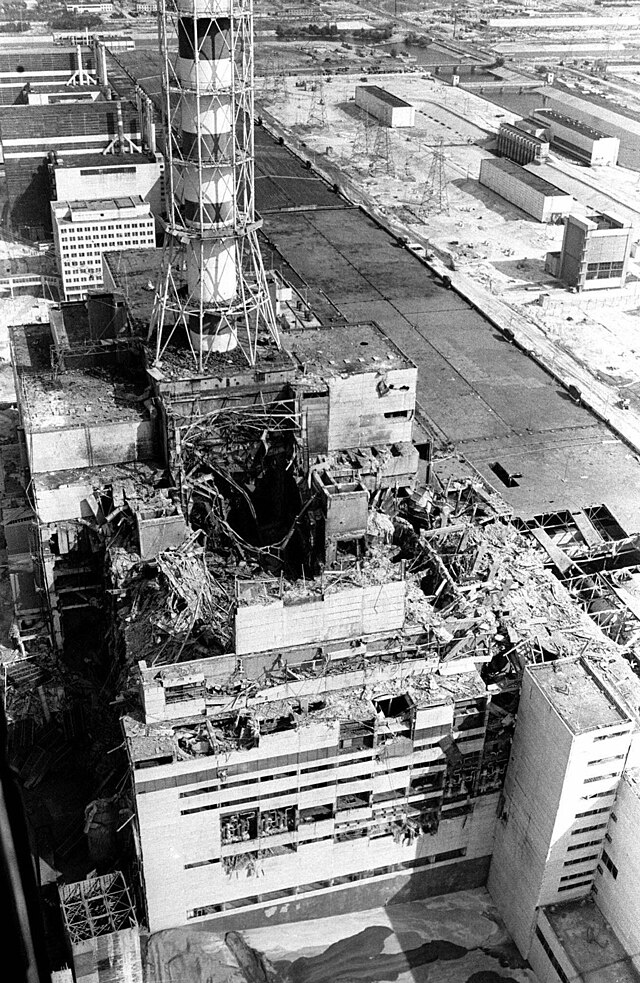
The disaster happened during a late-night safety test meant to examine how the reactor would behave during a power loss. Instead, a combination of design flaws in the RBMK reactor and serious operator errors caused a sudden power surge. Two explosions destroyed the reactor building and exposed the reactor core.
Background
Chernobyl’s Reactor No. 4 was an RBMK-1000, a Soviet-designed graphite-moderated, water-cooled reactor. This type of reactor had known safety weaknesses, including instability at low power and a design that could increase reactivity under certain conditions. These risks were not fully understood by plant staff, and some crucial safety information was not clearly communicated.
Pripyat, the nearby city built for plant workers and their families, was home to nearly 50,000 people. Before the accident, the power plant was considered an important part of the Soviet energy system. However, the culture of secrecy, weak safety procedures, and pressure to complete tests contributed to unsafe operating conditions.
The Event
On the night of April 25–26, operators prepared for the turbine rundown test. Due to delays and procedural mistakes, the reactor was run in an unstable state at very low power. To maintain output, operators disabled several safety systems and withdrew too many control rods.
At 1:23 a.m., the test began. A sudden and uncontrollable surge in power followed. When operators attempted an emergency shutdown, a flaw in the control rod design made the situation worse for a brief but fatal moment. The reactor exploded, blowing off the heavy cover plate and starting fires.
Firefighters and plant workers responded immediately, often without understanding the level of radiation they faced. Many received lethal doses. In the days that followed, helicopters dropped sand, boron, clay, and lead onto the burning reactor. Soviet authorities evacuated Pripyat about 36 hours after the accident, and a wider exclusion zone was later established.
Impact and Legacy
The human cost of the Chernobyl Disaster was severe. Two plant workers died that night, and dozens of emergency responders and staff later died from acute radiation sickness. Long-term health effects, especially increased thyroid cancer among those exposed as children, became a major concern. The full death toll remains debated, depending on the method used to estimate radiation-related illnesses.
Chernobyl also had major political and environmental consequences. It exposed serious flaws in Soviet governance and secrecy, damaging public trust. Radioactive fallout affected farmland, forests, and water systems across a broad region. Large areas around the reactor remain restricted, though wildlife has also returned to parts of the exclusion zone.
A concrete and steel shelter known as the sarcophagus was first built to contain the ruined reactor. In 2016, the New Safe Confinement, a much larger structure, was placed over it to reduce further contamination and allow safer dismantling work. The disaster reshaped global nuclear safety standards and remains central to debates about nuclear energy.
Did You Know?
- The nearby city of Pripyat was not evacuated until the afternoon of April 27, about 36 hours after the explosion.
- Radioactive contamination from Chernobyl was detected as far away as Scandinavia before Soviet authorities publicly acknowledged the accident.
- The Chernobyl Exclusion Zone covers roughly 30 kilometers around the plant, though contamination extended far beyond it.
- Reactor No. 4 is now enclosed by the New Safe Confinement, one of the largest movable land-based structures ever built.