> CUBAN MISSILE CRISIS
A 13-day Cold War standoff in 1962 brought the United States and Soviet Union to the brink of nuclear war.
Overview
The Cuban Missile Crisis was a 13-day confrontation in October 1962 between the United States and the Soviet Union over Soviet nuclear missiles placed in Cuba. It is widely considered the most dangerous moment of the Cold War because both superpowers were armed with nuclear weapons and came close to direct conflict. The crisis began when American reconnaissance discovered missile sites under construction in Cuba, just 90 miles from Florida.
U.S. President John F. Kennedy responded by announcing a naval “quarantine” of Cuba to stop further Soviet military shipments. Soviet leader Nikita Khrushchev initially resisted, and the world watched as Soviet ships approached the U.S. blockade line. After days of tense negotiations, the two sides reached a settlement that avoided war.
Background
The roots of the Cuban Missile Crisis lay in the broader Cold War rivalry between the United States and the Soviet Union. After Fidel Castro’s revolution in Cuba in 1959, the island moved closer to the Soviet Union. The United States became increasingly hostile to Castro’s government, especially after the failed Bay of Pigs invasion in 1961, when U.S.-backed Cuban exiles tried to overthrow him.
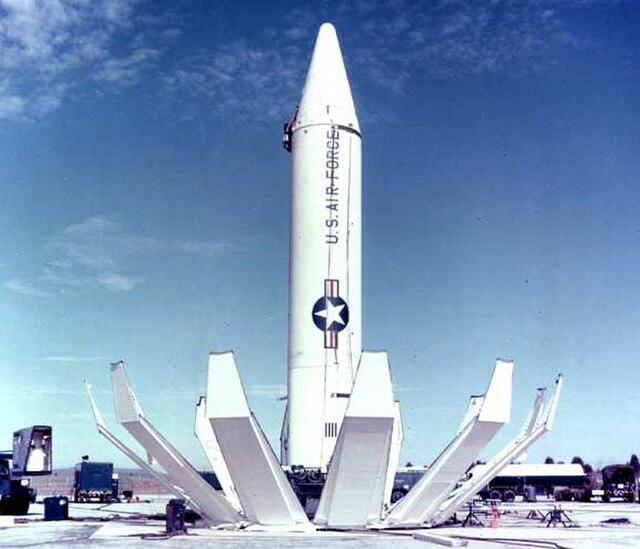
For Khrushchev, placing missiles in Cuba served several purposes. It would strengthen the defense of Cuba, counter the American nuclear advantage, and respond to U.S. missiles already stationed in Turkey and Italy near Soviet borders. For Castro, Soviet support offered protection against another possible U.S. invasion.
Key Moments of the Crisis
On October 14, 1962, a U-2 spy plane photographed Soviet medium-range ballistic missile sites in Cuba. After reviewing the evidence, Kennedy and his advisers debated possible responses, including air strikes, invasion, or a naval blockade. Kennedy chose the blockade, which he announced on October 22 in a televised address to the nation.
The tension reached its peak over the next several days. Soviet ships slowed or turned back, but missile construction in Cuba continued. Behind the scenes, messages between Kennedy and Khrushchev revealed differing positions. On October 26 and 27, Khrushchev sent letters offering to remove the missiles if the United States pledged not to invade Cuba. A second message also demanded the removal of U.S. missiles from Turkey.
At the same time, events nearly spiraled out of control. A U-2 plane was shot down over Cuba on October 27, and military commanders on both sides prepared for possible war. Kennedy’s administration publicly accepted the first Soviet offer and secretly agreed to remove American Jupiter missiles from Turkey at a later date. On October 28, Khrushchev announced that the Soviet missiles in Cuba would be dismantled and removed.
Impact and Legacy
The Cuban Missile Crisis had lasting effects on international relations. It exposed the dangers of nuclear brinkmanship and convinced both Washington and Moscow of the need for better communication. In 1963, the two sides established the Moscow-Washington hotline to allow direct contact between leaders during future emergencies.
The crisis also contributed to later arms control efforts, including the Partial Nuclear Test Ban Treaty of 1963. Politically, Kennedy emerged with increased prestige in the United States, while Khrushchev faced criticism in the Soviet Union. Cuba remained under Castro’s rule, and U.S.-Cuban relations stayed hostile for decades.
Historically, the Cuban Missile Crisis remains a key example of how close miscalculation can bring nations to nuclear war. It continues to be studied as a major Cold War event and a lesson in diplomacy, military strategy, and crisis management.
Did You Know?
- The crisis lasted from October 16 to October 28, 1962, though the public first learned of it on October 22.
- The United States used the term “quarantine” instead of “blockade” because a blockade could be seen as an act of war under international law.
- A secret part of the settlement included the later removal of U.S. Jupiter missiles from Turkey.
- One of the most dangerous moments involved a Soviet submarine near Cuba whose crew was under extreme pressure and nearly launched a nuclear torpedo.
- The Cuban Missile Crisis is often described as the closest the world has ever come to nuclear war.