> GREAT PYRAMID OF GIZA
The oldest and largest pyramid in Egypt, built as a tomb for Pharaoh Khufu and the only surviving wonder of the ancient world.
Overview
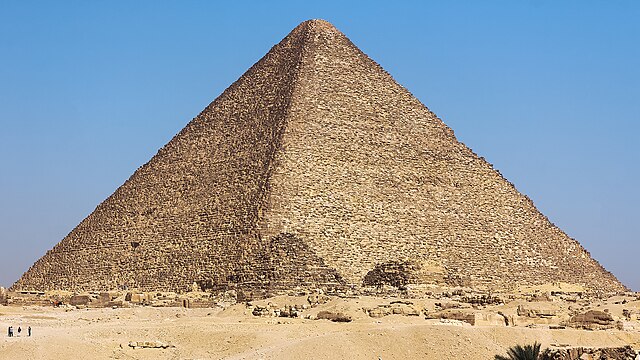
The Great Pyramid of Giza is the most iconic structure of ancient Egypt and the last remaining wonder of the Seven Wonders of the Ancient World. Built as a royal tomb for Pharaoh Khufu, it showcases remarkable engineering precision and scale. For over 3,800 years, it was the tallest man-made structure on Earth.
Key Facts
- Location: Giza, Egypt
- Built for: Pharaoh Khufu
- Height: Originally 146.6 meters
- Built: c. 2560 BC
- Material: Limestone and granite
History
Constructed during the Fourth Dynasty of Egypt’s Old Kingdom, the pyramid required decades of labor and organization. Thousands of skilled workers, not slaves as once believed, participated in its construction. It was part of a larger complex that included temples, smaller pyramids, and worker villages.
Architecture
The pyramid was originally covered in smooth white casing stones that reflected sunlight, making it shine brightly. Its precise alignment with the cardinal directions and near-perfect symmetry demonstrate advanced knowledge of mathematics and astronomy. Inside are passageways and chambers, including the King’s Chamber.
Impact / Legacy
The Great Pyramid remains a symbol of ancient ingenuity and power. It continues to fascinate historians, engineers, and tourists, offering insight into Egypt’s advanced civilization. Its construction techniques are still studied and debated today.
Did You Know?
- The pyramid contains about 2.3 million stone blocks.
- It was originally covered in polished limestone that gleamed in the sun.
- It aligns almost perfectly with true north.
- Its construction techniques are still not fully understood.