> TAJ MAHAL
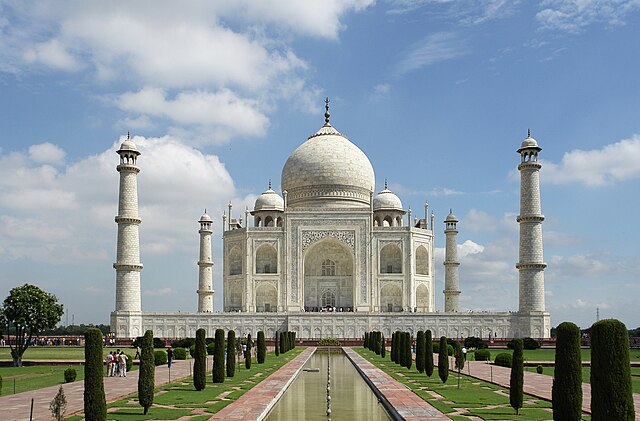
Iconic white marble mausoleum in India, built by Emperor Shah Jahan as a symbol of love and a masterpiece of Mughal architecture.
Overview
The Taj Mahal is one of the most famous monuments in the world, located in Agra, India. Built by Mughal Emperor Shah Jahan, it stands as a symbol of eternal love and is widely regarded as a masterpiece of Islamic architecture. Its stunning white marble design attracts millions of visitors each year.
Key Facts
- Location: Agra, India
- Commissioned by: Shah Jahan
- Built: 1632–1653
- Purpose: Mausoleum for Mumtaz Mahal
- UNESCO Status: World Heritage Site (1983)
History
The Taj Mahal was commissioned in 1632 by Emperor Shah Jahan following the death of his beloved wife, Mumtaz Mahal. Construction took over 20 years and involved thousands of artisans, craftsmen, and laborers from across the Mughal Empire and beyond. The project reflected both the emperor’s grief and his desire to create a lasting tribute to their love.
Architecture
The structure is built primarily from white marble and features intricate carvings, calligraphy, and inlaid gemstones. The central dome, surrounded by four minarets, is perfectly symmetrical, embodying the principles of Mughal architecture. Gardens, reflecting pools, and detailed geometric patterns enhance its visual harmony and spiritual symbolism.
Impact / Legacy
Today, the Taj Mahal is considered one of the New Seven Wonders of the World and remains a global symbol of love and devotion. It is also a major cultural and economic asset for India, drawing millions of tourists annually. Its design continues to influence architecture and art worldwide.
Did You Know?
- The Taj Mahal changes color depending on the time of day—pinkish in the morning, white at noon, and golden at sunset.
- Over 20,000 workers are believed to have contributed to its construction.
- Precious stones from across Asia were used to decorate the marble.
- The minarets are slightly tilted outward to protect the main tomb in case of collapse.